Building a Paper Organ
The Project
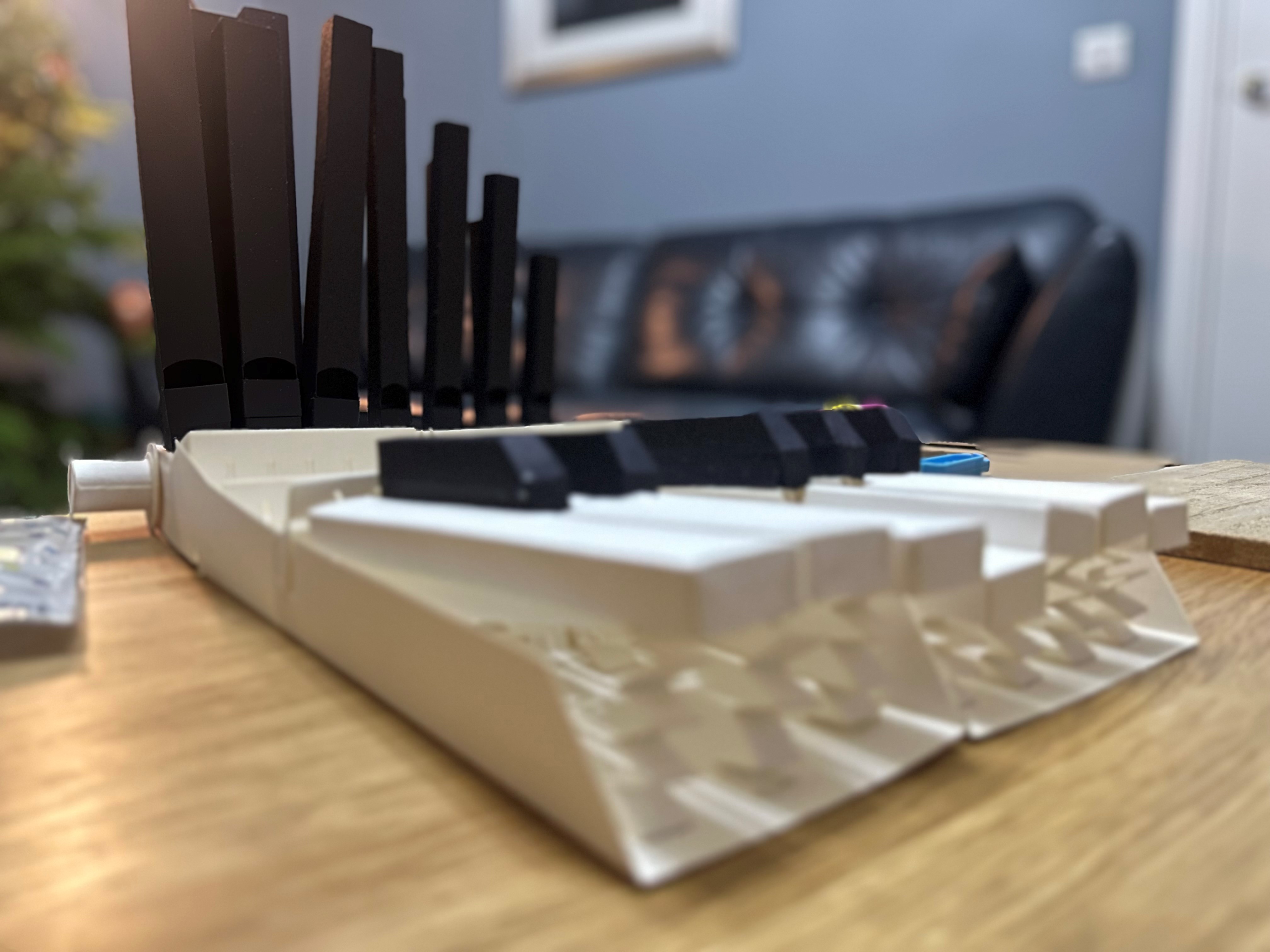
This papercraft kit allowed me to build a modular paper organ. It consists of 2 modules and includes all the necessary parts to create a fully functional 12-key (1 octave) organ. The kit is designed to be educational, helping me understand the mechanics of pipe organs, including air pressure and sound production.
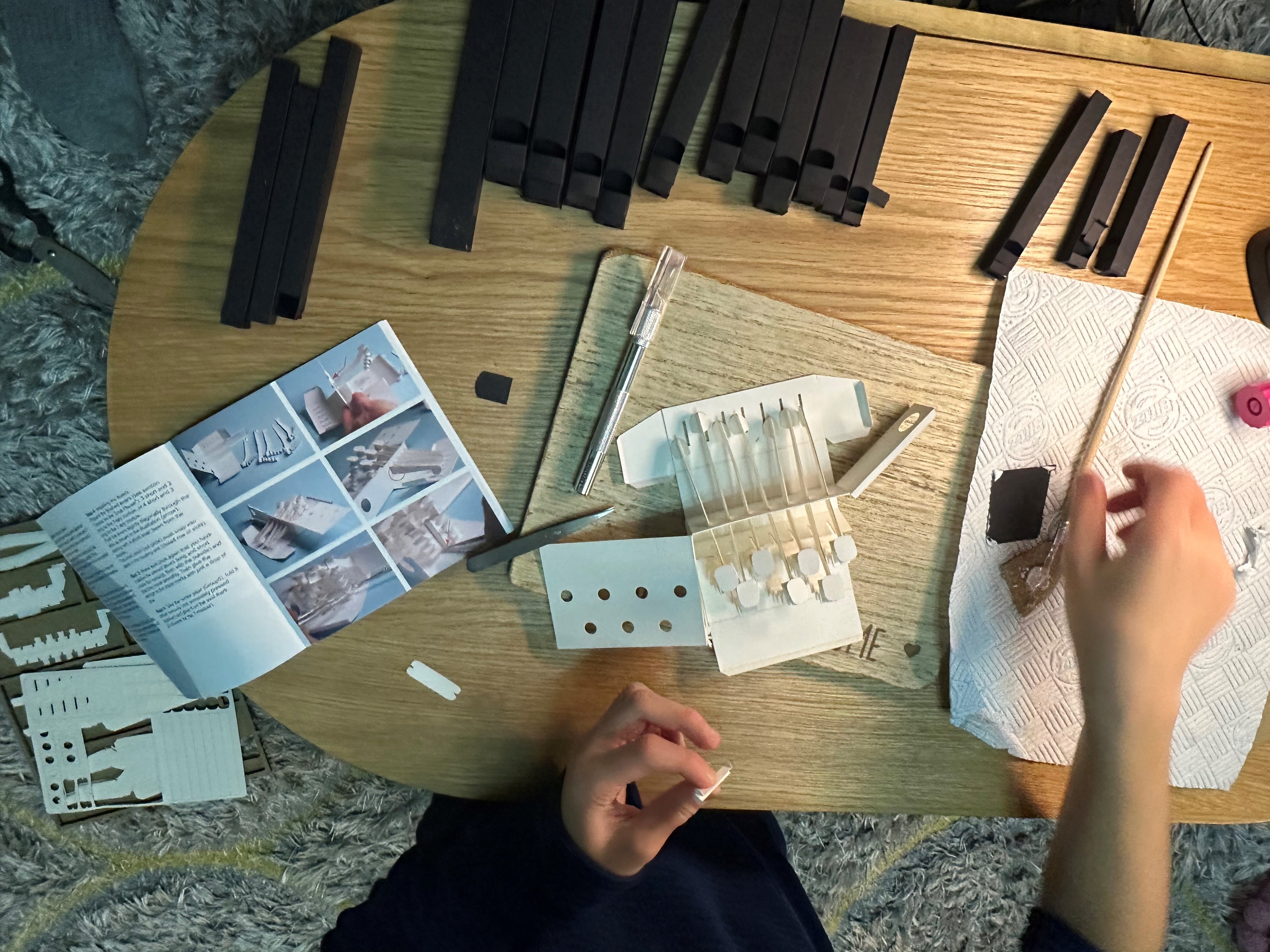
Building the Pipes
The journey began with carefully crafting each individual pipe. This meticulous process took several hours, ensuring each pipe was perfectly formed to produce the correct pitch.
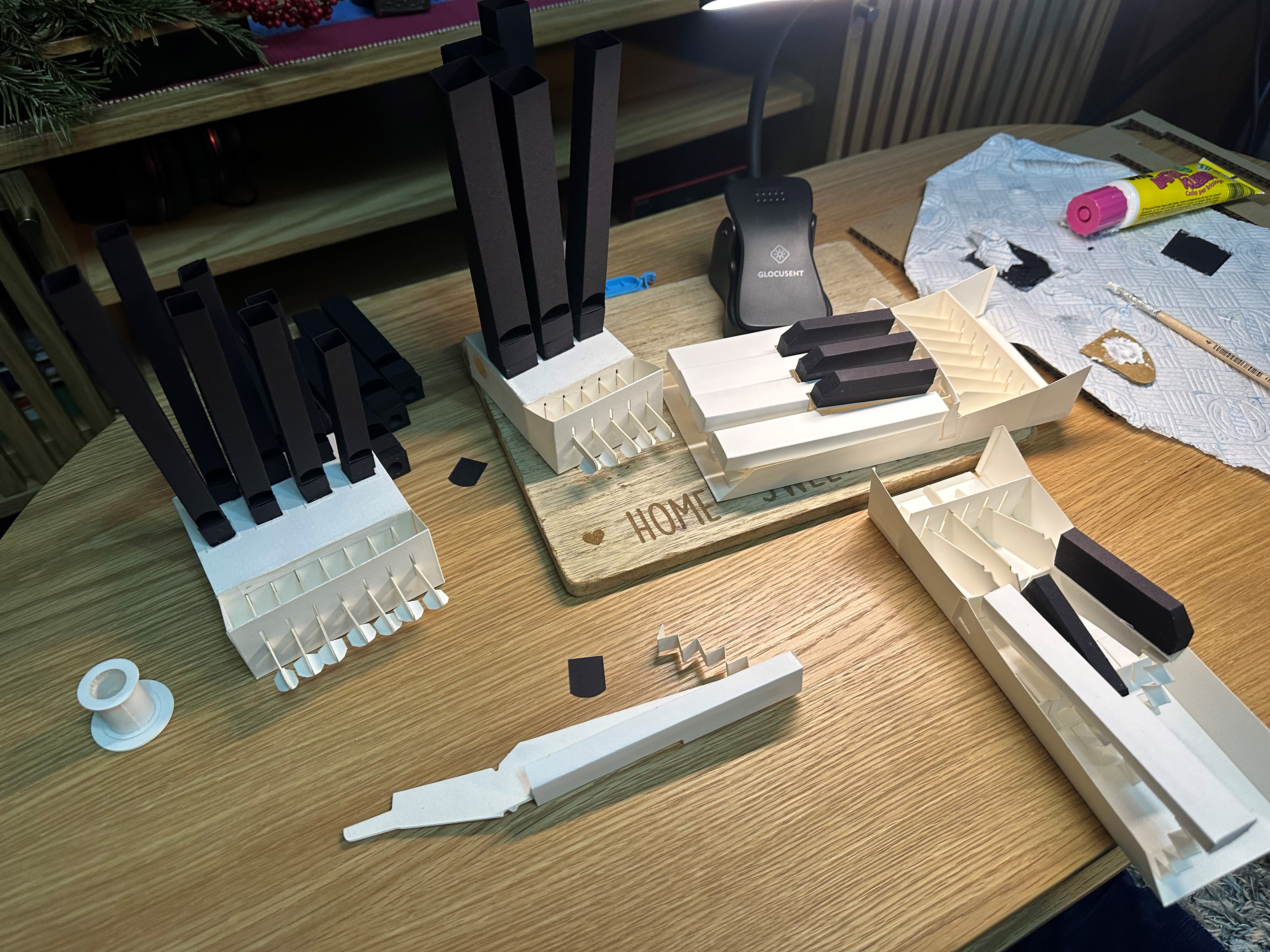
Each pipe needed to be constructed with precision—the diameter, length, and shape all affect the pitch and tone quality. I learned that even small variations in construction could result in pipes that wouldn't sound properly or would be out of tune with the others.
Assembly Process
After creating individual pipes and all other components (tone house, key levers, key house, air nozzle), the next challenge was assembling them into a functioning system.
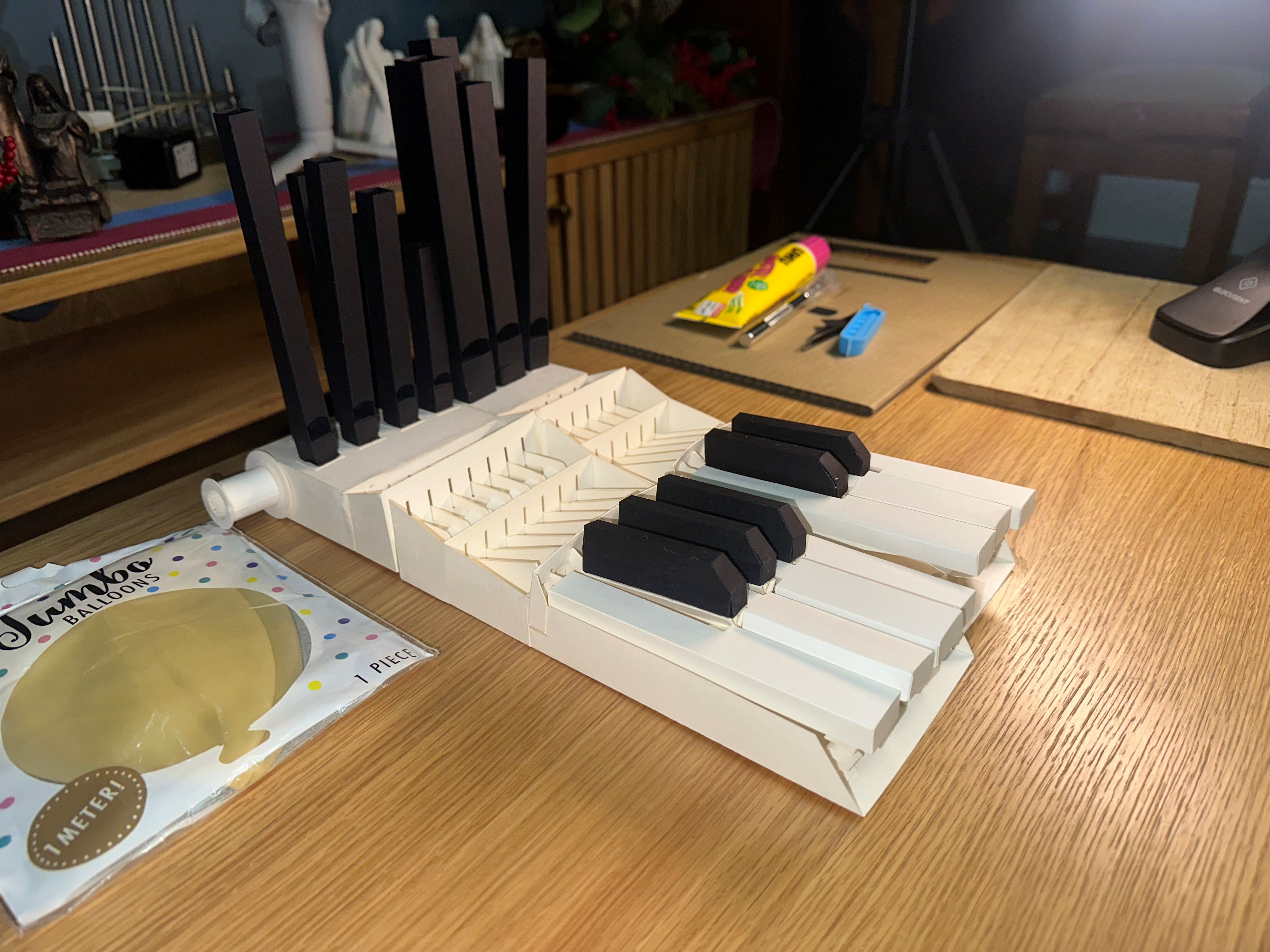
Construction Steps
Once all the parts were built, I constructed the tone house, which is where the pipes are mounted. I attached the pipes one by one, making sure the levers had enough clearance to open the holes that allow air to pass through to the pipes. Next was the key house, where I installed the paper keys. I made sure the levers were properly aligned before attaching the key house and tone house together.
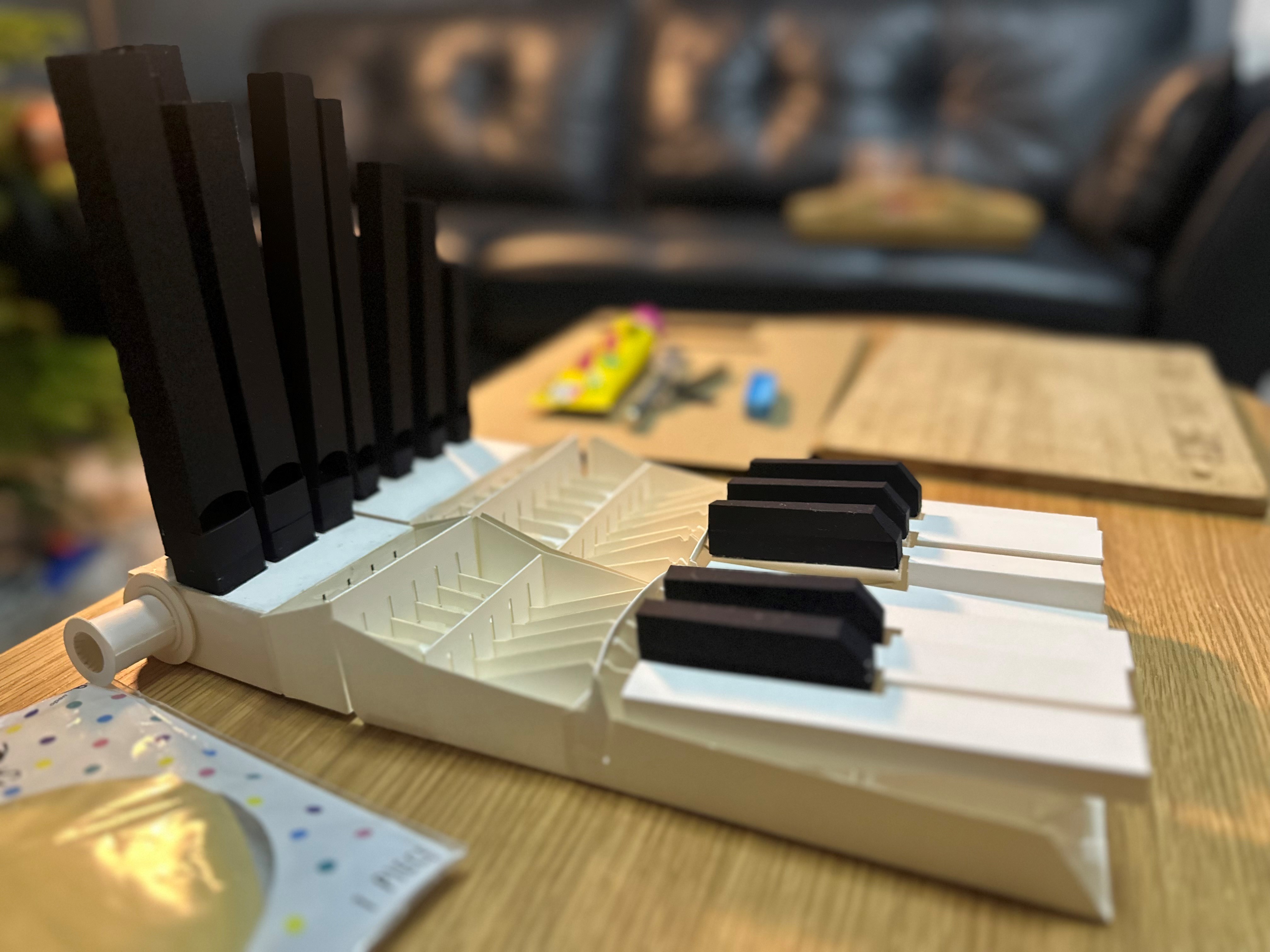
Understanding the Mechanism
The paper organ taught me about the fundamental mechanical linkages in pipe organs:
- Key Action: When you press a key, it pushes a lever that opens a valve
- Air Flow: Opening the valve allows pressurized air to enter the pipe
- Sound Production: Air flowing through the pipe creates vibration and sound
- Pitch Control: Different pipe lengths produce different pitches
- System Integration: All components must work together smoothly for the instrument to function
The Completed Organ
After hours of careful construction, the paper organ was complete and fully functional, demonstrating the fundamental principles of pipe organ mechanics.
Testing and Playing
The moment of truth came when I tested the completed organ. Blowing air through the system while pressing keys, I could hear each pipe produce its intended note. The satisfaction of hearing the instrument work after hours of careful assembly was immense.
Challenges Overcome
- Ensuring air-tight seals so pressure doesn't leak
- Aligning levers precisely so keys respond smoothly
- Constructing pipes with consistent dimensions for proper tuning
- Maintaining structural integrity while allowing mechanical movement
- Balancing aesthetics with functionality
What I Learned
Building this paper organ taught me valuable lessons about:
- Physics of Sound: How air pressure creates sound in organ pipes and how pipe length determines pitch
- Mechanical Linkages: The relationship between keys, levers, and valves—a simplified version of real organ action
- Precision Engineering: The importance of accuracy in musical instrument construction
- System Thinking: How individual components must work together as an integrated system
- Problem-Solving: Troubleshooting issues when components don't align or air leaks occur
- Patience and Persistence: Complex projects require careful, methodical work
Connection to Real Organs
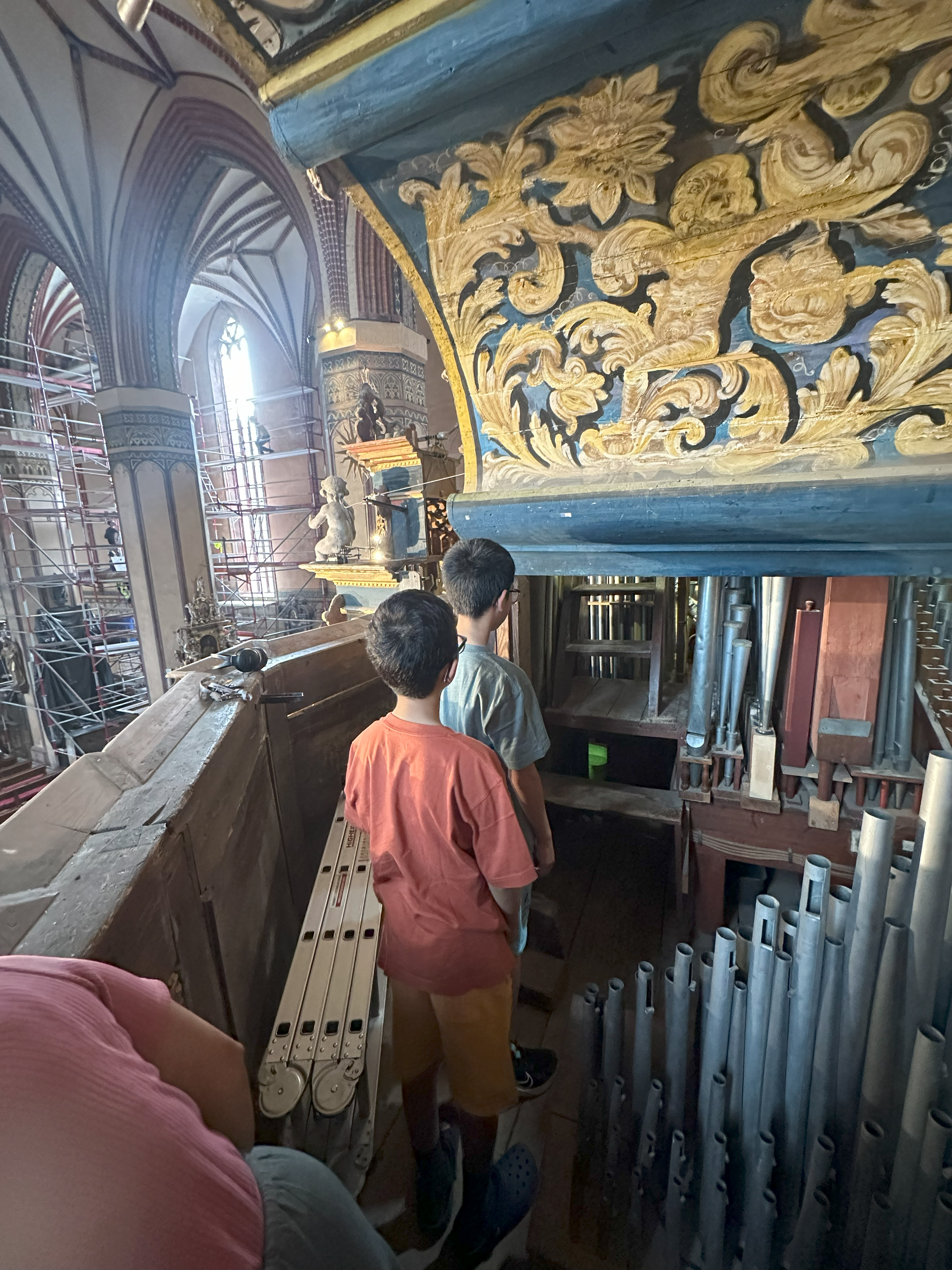
This small paper model operates on the same fundamental principles as the massive cathedral organs I've explored:
- Air pressure drives the system
- Keys control valves that direct air to specific pipes
- Pipe length determines pitch (longer = lower, shorter = higher)
- The mechanism must be precisely constructed for proper operation
The main differences are scale and complexity—real organs have thousands of pipes, multiple keyboards, sophisticated wind systems, and more elaborate control mechanisms. But the core principles remain the same.
Why This Project Matters
Building this paper organ wasn't just a craft activity—it was a hands-on lesson in physics, engineering, and music. It helped me understand the instruments I study in cathedrals across Europe. When I now see a massive pipe organ, I can visualize how pressing a key triggers a chain of mechanical events that ultimately produces sound. This tangible understanding makes my appreciation of real organs deeper and more informed.