A Journey Through Sound, Engineering, and Physics
Hi, I'm Łukasz Niezgoda, a pipe organ enthusiast and musician, and this is my STEM Scholarship portfolio. I have been fascinated with how things work since childhood, often taking apart various devices to understand their mechanisms. This natural curiosity, combined with my musical talent, has created a unique intersection of art and engineering in my life.
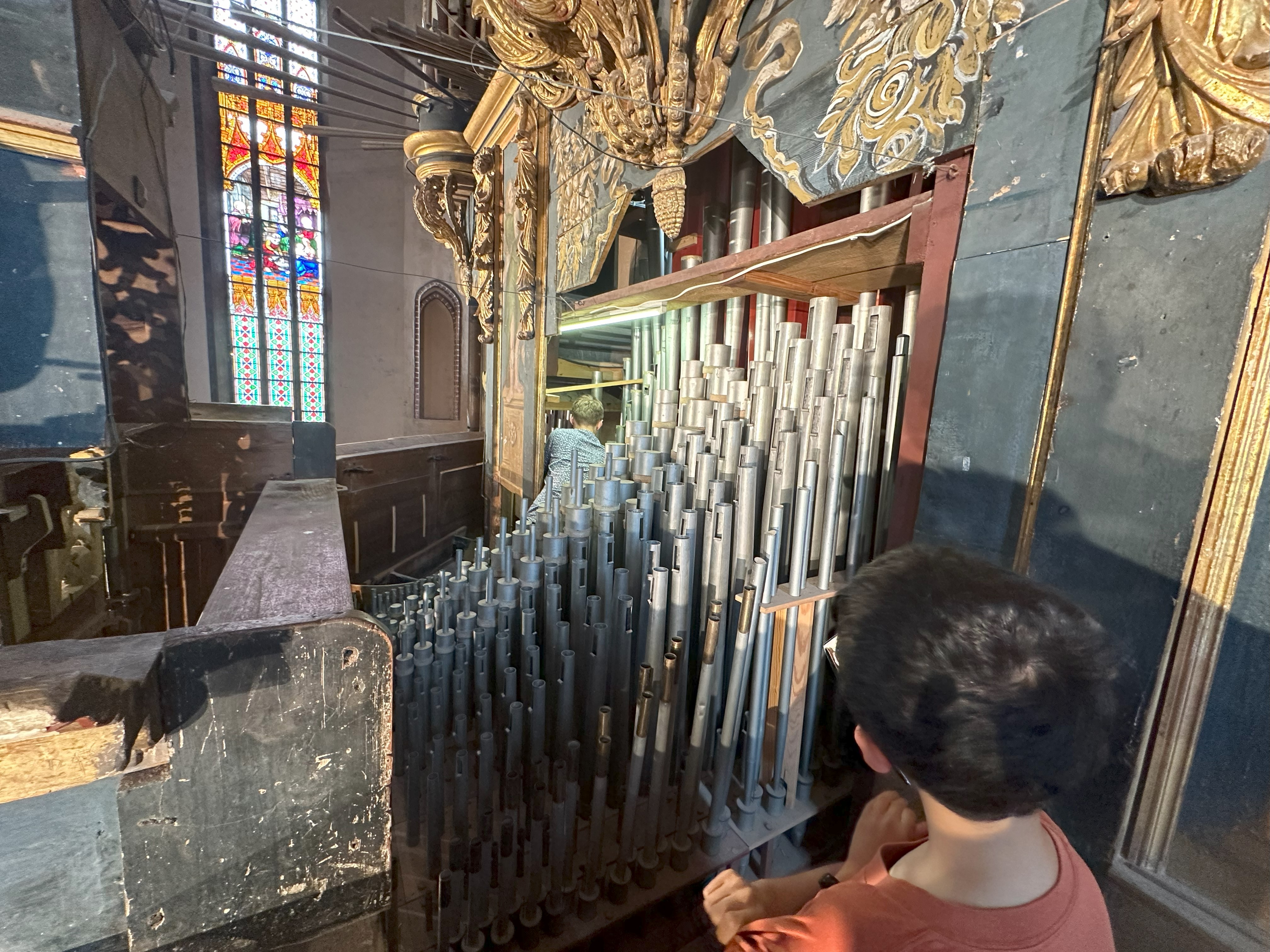
Traveling across the UK, Poland, and the Philippines to discover various organs has become our family's cherished summer activity. Each journey presents an opportunity to explore at least one instrument, often gaining behind-the-scenes access to examine air pump mechanisms, pipe ranks, and sometimes even participate in organ tuning.
Quick Facts
- Piano: Grade 7
- Organ: Grade 5
- Singing: Grade 8
- Age: 14 years old
- Studying at one of the UK's independent schools
- Organ explorer across UK, Poland, and Philippines
- Over 15 historic organs visited and documented
Why Pipe Organs Fascinate Me
The pipe organ fascinates me as both a musical instrument and an engineering marvel. It's the only single instrument capable of producing sound louder than a full orchestra while also achieving incredibly delicate, quiet tones. This dynamic range exemplifies the fascinating principles of physics at work.
The Science Behind the Sound
My interest in organs connects directly to my STEM research interests. The physics of sound production in organ pipes mirrors phenomena found throughout the universe—from volcanic vibrations to stellar oscillations. Just as different-sized organ pipes create distinct pitches, celestial bodies produce their own unique frequencies. This connection between musical instruments and cosmic phenomena demonstrates how fundamental physical principles operate across vastly different scales.
Understanding why different sounds sound different has become a central focus of my research interests. Organ pipes provide a perfect example of how size affects sound waves and pitch—larger pipes create deeper sounds with longer wavelengths, while smaller pipes produce higher pitches with shorter wavelengths. This practical demonstration of acoustic physics continues to inspire my exploration of both music and science.
How Pipe Organs Work
The pipe organ creates sound by directing pressurized air through pipes. Each pipe produces one unique note, with its pitch determined by size and shape. The system involves:
- Air Supply: Bellows or electric blowers create consistent air pressure
- Wind Chest: Distributes air to different pipe ranks
- Action: Mechanical, pneumatic, or electric system connecting keys to valves
- Pipes: Each produces a specific pitch based on length and diameter
- Stops: Control which sets of pipes receive air, creating different timbres
Explore My Portfolio
This portfolio documents my journey exploring pipe organs through four main sections:
Paper Organ Project
Building a functional paper organ to understand mechanical principles
View ProjectNotable Experiences
Frombork Cathedral - Participating in Organ Tuning

One of my most memorable experiences was at Frombork Cathedral in Poland, where I had the unique opportunity to participate in tuning an organ rank. This hands-on experience taught me about sound wave interference patterns—when two pipes are slightly out of tune, you can hear "beats" (regular fluctuations in volume). By adjusting tuning wires, we changed the pipe's effective length and pitch until these beats disappeared. This practical application of acoustic physics was invaluable.
Castle Rising - Hand-Pumped Organ
At Castle Rising, I explored a hand-pumped organ, gaining insights into the relationship between air pressure and sound production. This experience demonstrated how consistent air pressure is crucial for stable, full sound—when pressure drops, the sound becomes weak and unstable. This hands-on learning connected theory with practice in a way books never could.
Oliwa Cathedral - 5-Manual Baroque Marvel
With 8,000 pipes, 110 stops, and five manuals, Oliwa Cathedral's 1763 Johann Wulff organ is one of the most impressive instruments I've encountered. The sheer scale and complexity of this baroque masterpiece demonstrates the pinnacle of historical organ building craftsmanship.
Musical Training
My musical education has developed alongside my technical interests:
- Piano (Grade 7): Technical proficiency and musical expression across diverse repertoire
- Organ (Grade 5): Mastering the unique challenges of pipe organ performance
- Singing (Grade 8): Vocal technique focusing on interpretation and performance
Why This Matters for STEM
This portfolio demonstrates how artistic passion can drive scientific inquiry. Through exploring pipe organs, I've learned about:
- Physics: Sound waves, frequencies, resonance, and acoustic principles
- Engineering: Mechanical systems, air pressure management, and precision construction
- Mathematics: Ratios in musical intervals, wavelength calculations, and harmonic series
- Technology: Web development, cloud computing (AWS), and digital documentation
- Problem-Solving: Understanding complex systems by examining their components

Beyond Music
When I'm not exploring organs or practicing music, I enjoy:
- Reading about physics and engineering principles
- Taking apart devices to understand their mechanisms
- Traveling with family to discover new organs and cultures
- Learning web development and cloud technologies
- Analyzing how different musical instruments produce sound
Looking Forward
This portfolio represents my journey so far, but it's just the beginning. I'm excited to continue exploring the intersection of music, physics, and engineering—whether that's through organ studies, acoustic research, or new technological challenges. Each organ I visit teaches me something new about how the physical world produces the sounds that move us emotionally.